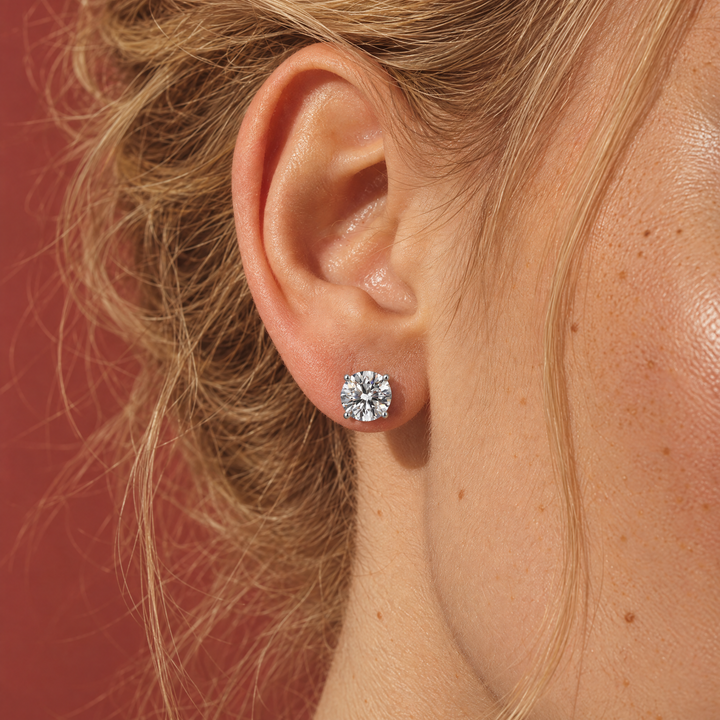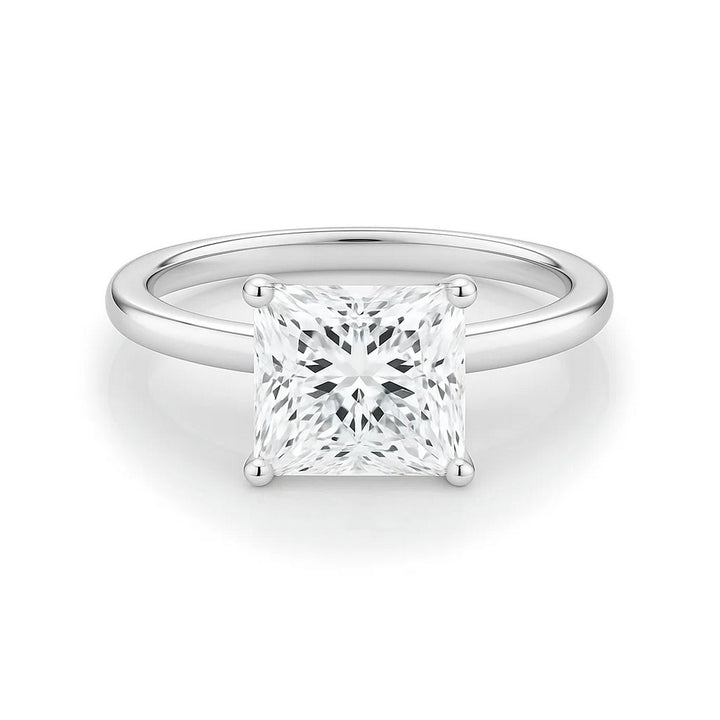

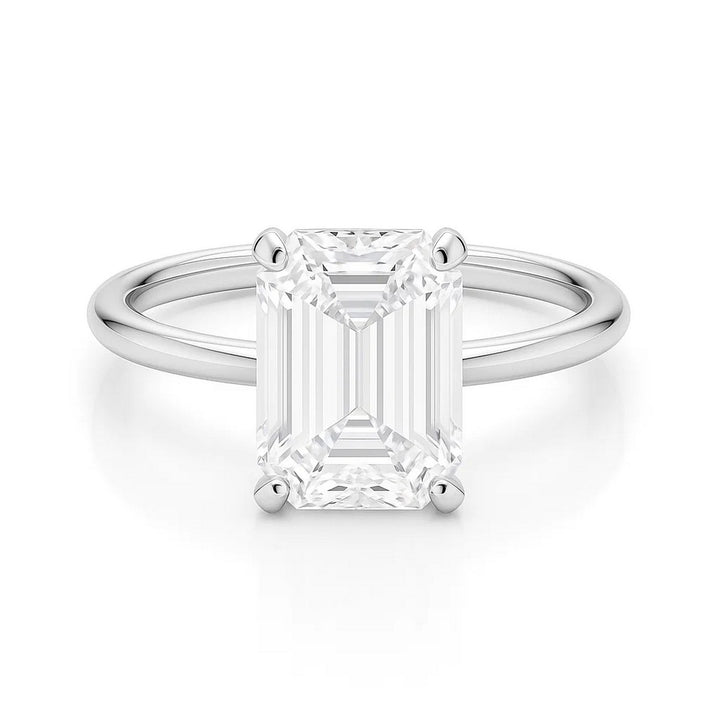

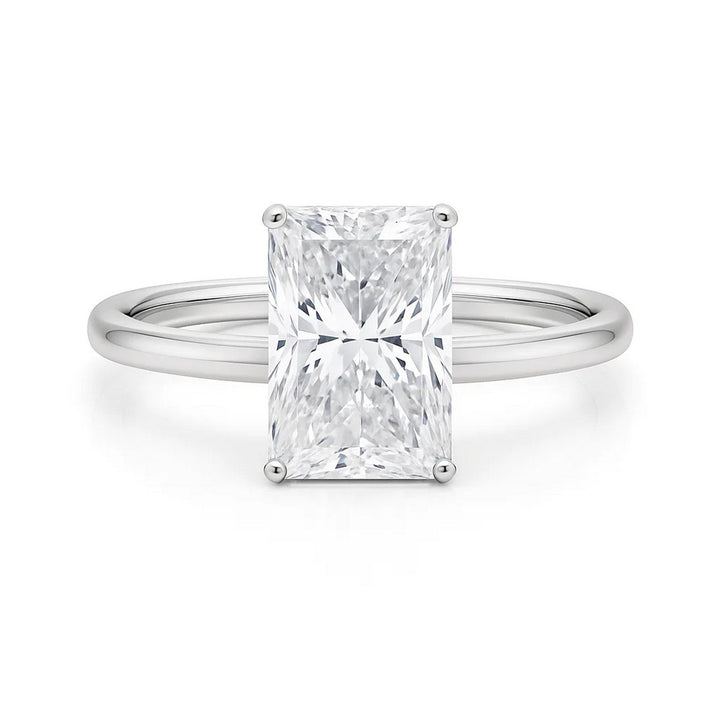

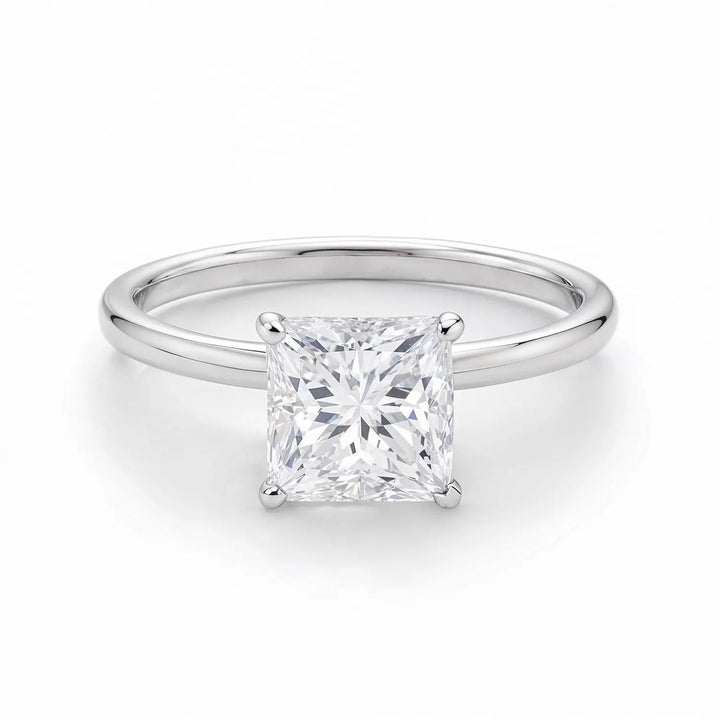

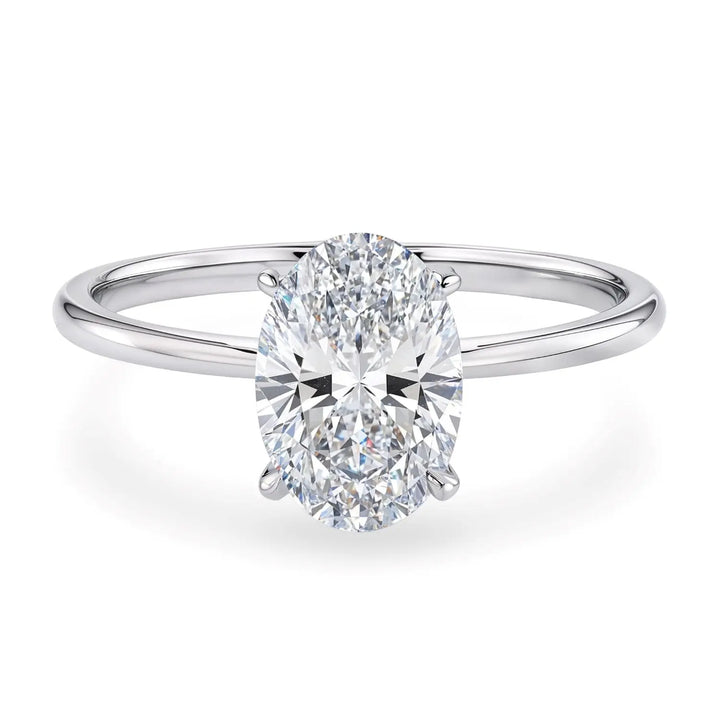

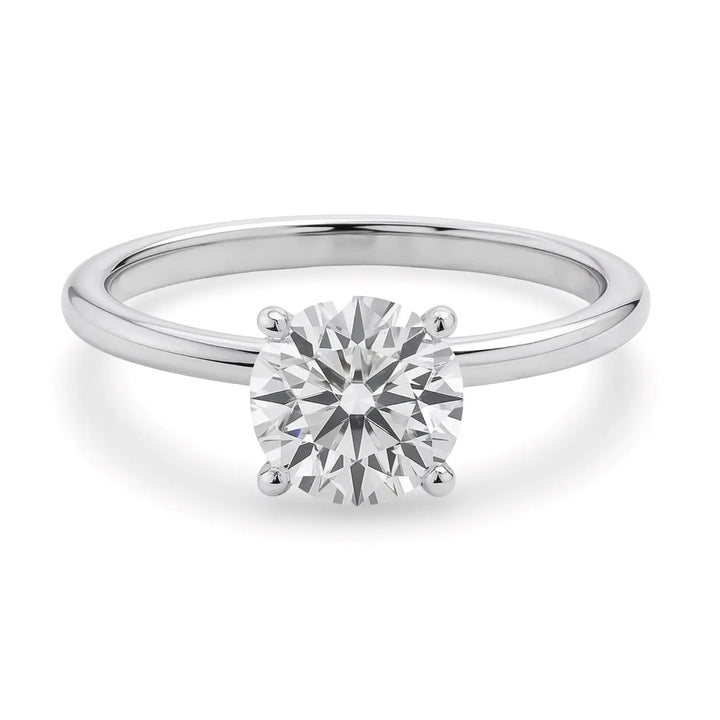

Engagement rings
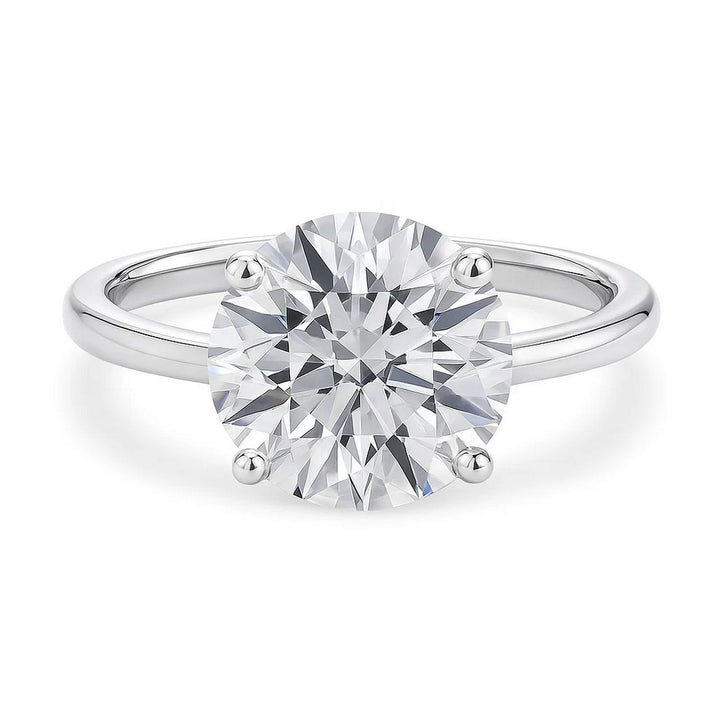
Solitaires and halos in six cuts — round, oval, cushion, princess, emerald and radiant — set in solid 14K gold.
A proposal
View the collectionA ring is chosen once and worn every day after. Growing the stone rather than mining it changes nothing about what it is — only how much of it a given budget will carry onto a hand.
In Brief
Every ring in this collection is set with a single lab-grown diamond in solid 14K gold, and each one includes its own IGI certificate. Six cuts — round, oval, princess, radiant, emerald and cushion — at 1.00, 1.50, 2.00, 3.00 and 5.00 ct, with G–H color and VS1–VS2 clarity throughout. Rings are stocked in sizes 3 to 9; prong work and rhodium re-plating are covered by the lifetime warranty, and one resize is included free.
Solitaires and halos in six cuts — round, oval, cushion, princess, emerald and radiant — set in solid 14K gold.
A proposal
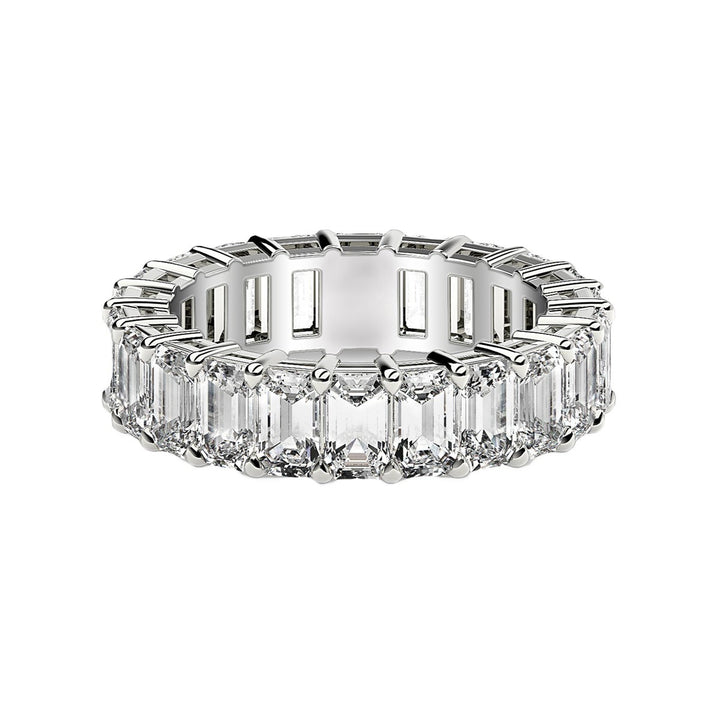
View the collectionThe band that comes after — diamonds unbroken the whole way around, made to order.
The anniversary, not the proposal
View the collectionEvery lab-grown piece in the range, if you want to start from the diamond.
Choosing by stone rather than by form
View the collectionCompare
Both are diamond. The difference is where the carbon crystallised, and what that changes is grading, cost, and the carat weight within reach at a given budget.
| Lab-Grown | Natural | |
|---|---|---|
| CompositionChemically, physically and optically identical. Origin is the only difference. | Crystallised carbon | Crystallised carbon |
| Grading | Independently graded. Single-stone pieces — engagement rings, studs — include an individual IGI certificate; tennis bracelets and eternity bands come with an AGI certificate. | Conflict-free and responsibly sourced. |
| Cost at equal specificationThe figure DEEVE states storewide. | Approximately 70% less | Market price |
| Carat weight within a given budget | Higher — a full eternity band at 2 to 8 carats stays within reach | Lower at the same specification |
| Hardness and daily wearNo difference in durability. | 10 on the Mohs scale | 10 on the Mohs scale |
Neither is the better stone. Lab-grown suits a larger carat weight within a set budget, and arrives independently graded — with an individual IGI certificate on single-stone pieces and an AGI certificate with every tennis bracelet and eternity band. Natural suits a preference for a stone formed over geological time, and is conflict-free and responsibly sourced. The choice is one of priority, not quality.
The DEEVE Standard
From the Journal
 Lab-Grown vs Natural Diamond Engagement Rings: What Every Bride Should Know
Read the guide
 How to Choose an Engagement Ring: A Lab-Grown Diamond Buying Guide
Read the guide
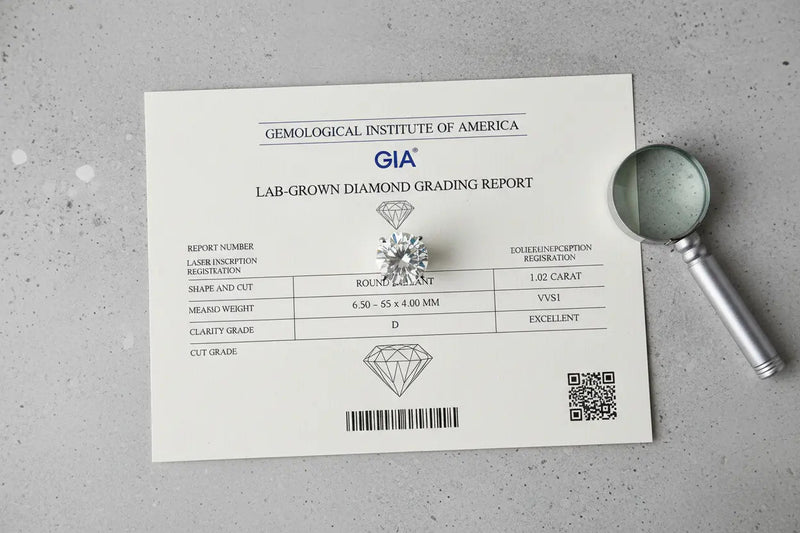 What Is an IGI Lab Grown Diamond Certificate — and How Do You Read One?
Read the guide
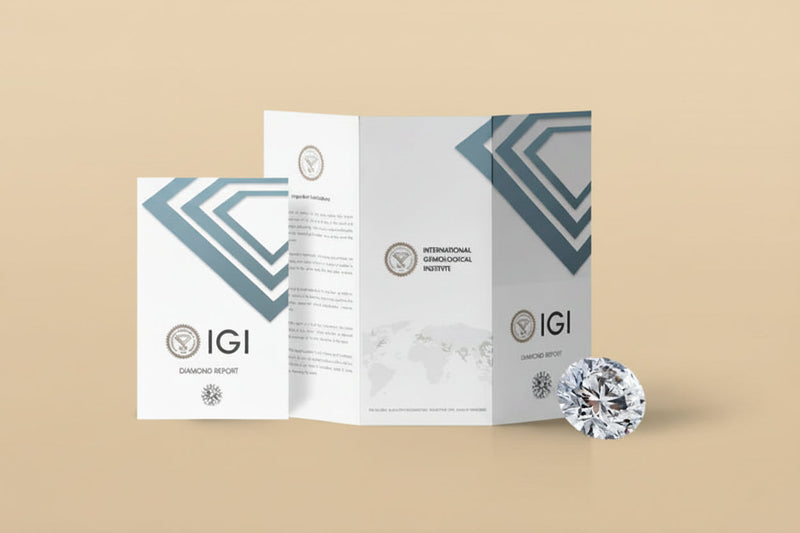 Diamond Certificates & Grading Reports: IGI, GIA & What They Mean
Read the guide
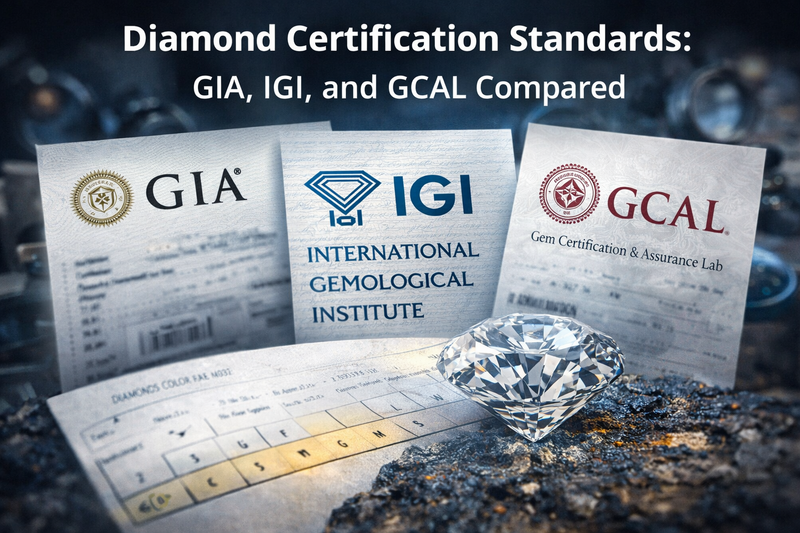 IGI vs GIA for Lab-Grown Diamonds: Which Certificate Should You Trust?
Read the guide
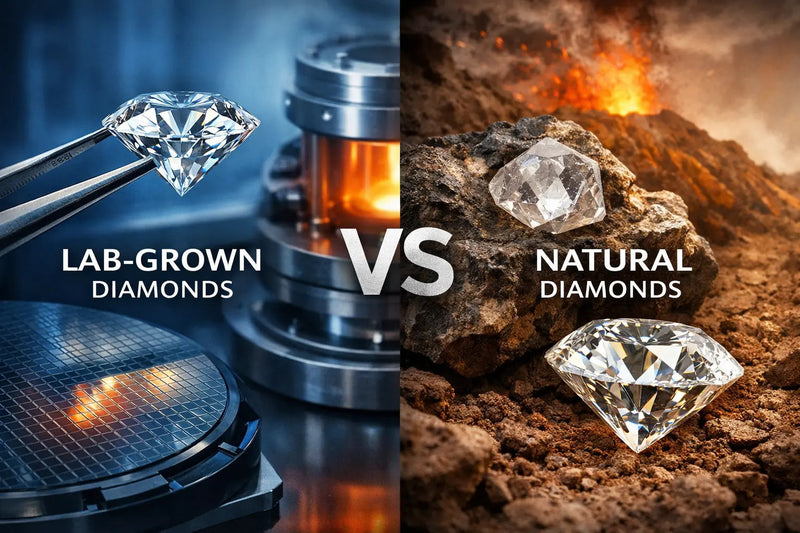 Lab-Grown vs Natural Diamonds: Are They Really the Same?
Read the guide
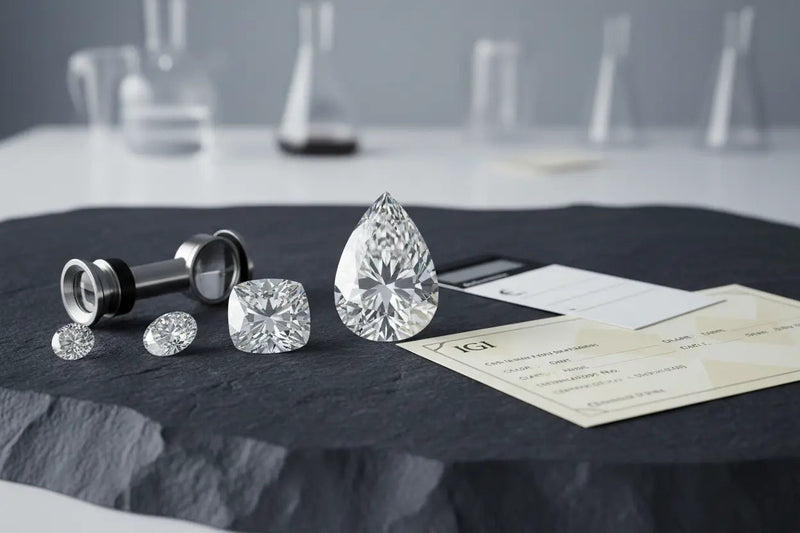 Lab-Grown Diamond Myths Debunked: What's True, What's Marketing?
Read the guide
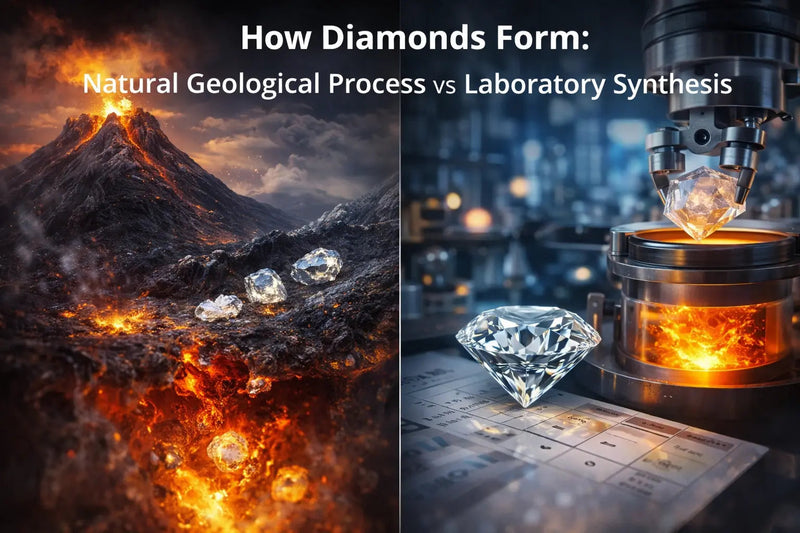 How Are Diamonds Formed? Natural vs Lab-Grown Formation Explained
Read the guide
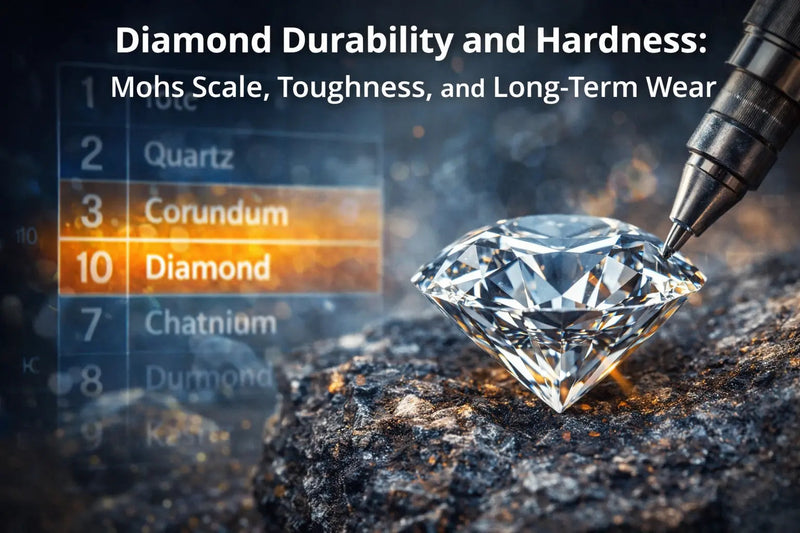 How Durable Are Diamonds? Hardness, Toughness & Long-Term Wear Explained
Read the guide
 The Complete Lab-Grown Diamond Guide: Everything You Need to Know Before You Buy
Read the guide
 Lab-Grown Diamond Price Per Carat in Canada: October 2026 Index
Read the guide
 Lab-Grown vs Mined Diamonds: Which Is Better for the Environment?
Read the guide
 Are Diamonds Ethical? Conflict-Free, Kimberley Process & Traceability Explained
Read the guide
 Diamond Brilliance, Fire & Scintillation: What Makes a Diamond Sparkle?
Read the guide
 What Is a Type IIa Diamond? The Purest Diamond Explained
Read the guide
 Understanding GIA Reports: Grading & Verification
Read the guide
 What Is an HRD Diamond Certificate — and Should You Trust It for Lab-Grown Diamonds?
Read the guide
 GIA vs HRD Diamond Certificates: Which Is Better for Lab-Grown Diamonds?
Read the guide
 What Is a Lab Grown Diamond? Science, Quality & Why They're Real
Read the guide
Recommended pieces


About this collection
A lab-grown diamond is the same stone by every measure that decides how a ring looks and lasts — the same carbon lattice, the same hardness, the same fire. What changes is what comes within reach at a given budget.
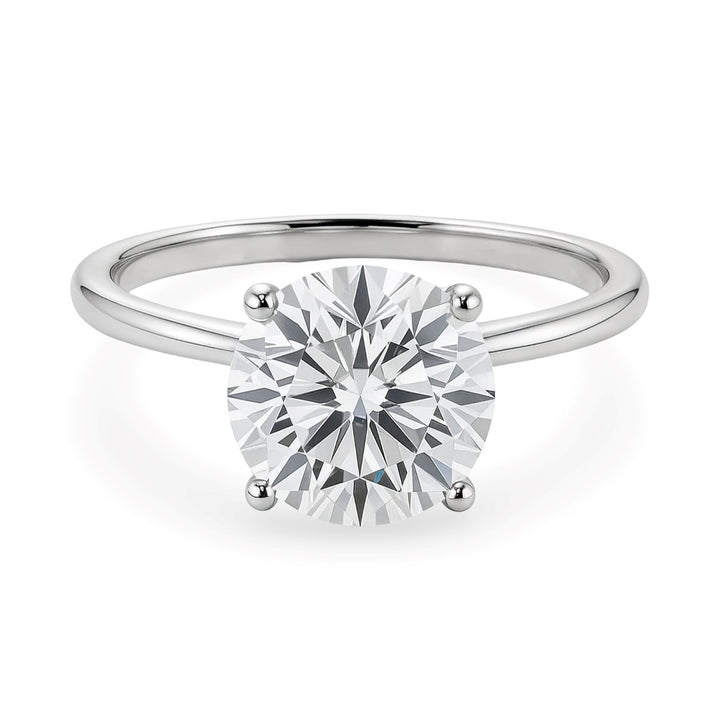
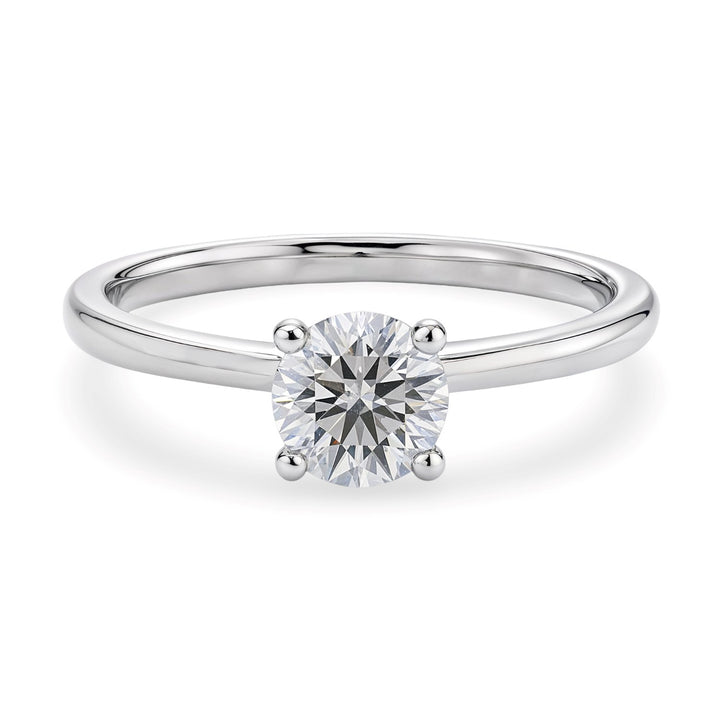
Every ring here is set with a single lab-grown diamond and made in solid 14K gold. The collection is built as a grid rather than a scatter: six cuts — round, oval, princess, radiant, emerald and cushion — at five carat weights from 1.00 to 5.00 ct. Color is G–H and clarity VS1–VS2 across all thirty, so what is actually in front of you is a choice of shape and scale, not a spec sheet.
Each ring here is a single-stone piece, so each carries its own IGI certificate — a record of that exact diamond's cut, color, clarity and carat weight, rather than a sample or a range. Our guide to reading an IGI certificate walks through the document field by field.
Rings are stocked rather than made to order, so your size ships as it is. Prong work and rhodium re-plating are carried out by our in-house workshop and covered by the lifetime warranty, and one resize is included free; additional resizes are chargeable. Confirm your size against the jewelry size guide before ordering. If the ring you have in mind is not here, our bespoke service makes it to order — two to six weeks depending on the design.
A short welcome, then new pieces and the occasional note from the workshop — no more than monthly. A few welcome emails first, then one letter a month at most, plus a reminder about pieces you viewed or left in your cart. Unsubscribe in a click. View our privacy policy and terms of service for more info.