


2 to 3 carats
A fine, continuous line that sits close to the wrist. Reads as jewelry rather than statement.
Everyday wear and layering
View the 2 carat braceletEvery bracelet here comes with an AGI certificate, in the box. A tennis bracelet is a continuous line of light around the wrist. The only real decision is how much of the wrist it claims.
In Brief
A diamond tennis bracelet is a continuous strand of individually set diamonds in a flexible band. DEEVE's are set with E–F, VVS2–VS1 lab-grown diamonds in solid 14K yellow or white gold at the same price, each with an AGI certificate from the Accredited Gemological Institute, from 2 to 10 carats total weight, with four-prong settings and box clasps with hidden safety closures. Every bracelet can be sized by our in-house workshop and carries the lifetime warranty.
A fine, continuous line that sits close to the wrist. Reads as jewelry rather than statement.
Everyday wear and layering
View the 2 carat braceletThe most versatile range — clearly present without dominating the wrist.
Day-to-evening wear
View the 4 carat braceletIndividual stones become distinct and the line carries real weight.
Statement wear
View the 6 carat braceletMaximum presence, with the stones reading individually across the full strand.
Worn alone
View the 8 carat bracelet
Spotlight
$3,097.00
View the pieceCompare
Both are diamond. The difference is where the carbon crystallised, and what that changes is grading, cost, and the carat weight within reach at a given budget.
| Lab-Grown | Natural | |
|---|---|---|
| CompositionChemically, physically and optically identical. Origin is the only difference. | Crystallised carbon | Crystallised carbon |
| Grading | Independently graded. Single-stone pieces — engagement rings, studs — include an individual IGI certificate; tennis bracelets and eternity bands come with an AGI certificate. | Conflict-free and responsibly sourced. |
| Cost at equal specificationThe figure DEEVE states storewide. | Approximately 70% less | Market price |
| Carat weight within a given budget | Higher — a full eternity band at 2 to 8 carats stays within reach | Lower at the same specification |
| Hardness and daily wearNo difference in durability. | 10 on the Mohs scale | 10 on the Mohs scale |
Neither is the better stone. Lab-grown suits a larger carat weight within a set budget, and arrives independently graded — with an individual IGI certificate on single-stone pieces and an AGI certificate with every tennis bracelet and eternity band. Natural suits a preference for a stone formed over geological time, and is conflict-free and responsibly sourced. The choice is one of priority, not quality.
Collection Specifications
Buying Guide
E–F (colorless) color and VVS2–VS1 (very, very slightly to very slightly included) clarity is what DEEVE sets — every stone reads colorless and eye-clean at a fraction of D-FL pricing, and each bracelet comes with an AGI certificate
White gold enhances the icy, colorless look of lab-grown diamonds; yellow gold adds warmth and pairs naturally with other gold pieces
If you plan to stack, stay in the 2–3 or 4–5 carat range — it layers more naturally than a high-carat statement bracelet
The Guide
The DEEVE Standard
FAQ
Yes. DEEVE tennis bracelets feature lab-grown diamonds — physically and chemically identical to mined diamonds. They are real diamonds, not simulants like cubic zirconia or moissanite.
Both use real diamonds. Lab-grown diamonds cost approximately 70% less than equivalent natural stones, making higher carat weights far more accessible. Natural diamonds carry geological rarity and heritage.
Yes. Every DEEVE tennis bracelet comes with an AGI certificate, issued by the Accredited Gemological Institute in New York and packed in the box with the bracelet. Color is E–F (colorless) and clarity VVS2–VS1 (very, very slightly to very slightly included), matched across every stone in the line, and the certificate records those grades with the total diamond weight and the 14K gold setting. Our lab-grown pieces sold with an individual IGI certificate are the engagement rings and diamond studs.
14K gold is the ideal balance of purity (58.5% gold) and durability for everyday fine jewelry. It is harder and more scratch-resistant than 18K, while retaining a rich color superior to 10K — the industry standard for fine jewelry in North America.
2–3ct for subtle everyday elegance. 4–5ct is the most popular range for noticeable brilliance. 6–7ct for bold statement styling. 8–10ct for maximum red-carpet impact.
Every DEEVE tennis bracelet, from 2 to 10 carats, comes in both, with the same diamonds and the same price. White gold reads icier against a continuous line of diamonds and suits a wrist that already wears silver-toned pieces or a steel watch; yellow gold is warmer and sits naturally beside the gold you already wear. The rhodium finish on white gold is renewed under the lifetime warranty at no charge, and both are solid 14K gold, never plated or vermeil.
Yes. DEEVE tennis bracelets are built in solid 14K gold with a four-prong setting and box clasp engineered for decades of daily wear.
Yes. Every DEEVE tennis bracelet can be sized or resized by our in-house jewelry studio, and we also offer custom sizing and made-to-order pieces if you need something outside our standard range.
Every DEEVE tennis bracelet is made to a 7-inch (17.8 cm) length, which suits most wrists. Measure your wrist and add 1.5 to 2 cm for a comfortable fit. Any other length is sized to order by our in-house workshop rather than held in stock, so speak to us before ordering. Our Jewelry Size & Fit Guide covers how to measure.
30-day returns for unworn bracelets in original condition. Return shipping is at the customer's cost.
Yes. Every DEEVE tennis bracelet includes a lifetime warranty covering manufacturing defects.
Clean with warm water, mild dish soap, and a soft brush, and store the bracelet in its pouch or box when not wearing it. Avoid harsh chemicals, ultrasonic cleaners, and prolonged exposure to chlorine or saltwater.
Yes. DEEVE's in-house workshop produces custom tennis bracelets to order, including carat weights beyond the standard range. Custom orders take two to six weeks depending on the design.
A tennis bracelet is a bracelet made of individually set diamonds linked together in a continuous, flexible line so it moves fluidly with the wrist. Each stone is typically held in its own four-prong mount, creating an unbroken strand of brilliance rather than a single central stone.
The name comes from a 1987 US Open match, when professional tennis player Chris Evert stopped play after her diamond line bracelet snapped and fell onto the court. The moment was broadcast live, and jewelers began calling the style a 'tennis bracelet' soon after.
DEEVE tennis bracelets are made in a single 7-inch length rather than being slider-adjustable — but they resize. Our workshop shortens or lengthens the bracelet at the hinges, so the fit is corrected after purchase rather than having to be right the first time. One resize per piece is complimentary; additional resizes are chargeable.
Yes. The tennis bracelet is one of the most enduring designs in fine jewelry, worn continuously since the 1980s. Its simple, repeating structure keeps it from dating the way more trend-driven designs can.
No. While tennis bracelets are traditionally marketed toward women, the design itself is unisex, and thinner or lower-carat versions are increasingly worn by men as a minimal, everyday piece.
From the Journal
 The Complete Diamond Tennis Bracelet Buying Guide: Cost, Carat Weight, Metal and Fit
Read the guide
The Complete Diamond Tennis Bracelet Buying Guide: Cost, Carat Weight, Metal and Fit
Read the guide
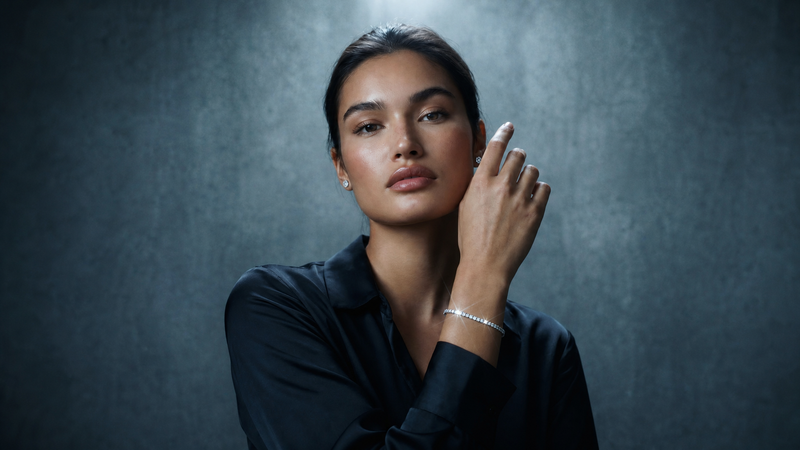 Tennis Bracelet Carat Guide: How Many Carats Should a Tennis Bracelet Be?
Read the guide
Tennis Bracelet Carat Guide: How Many Carats Should a Tennis Bracelet Be?
Read the guide
 How to Size a Tennis Bracelet: Measuring Your Wrist, the Size Chart and Standard Length
Read the guide
How to Size a Tennis Bracelet: Measuring Your Wrist, the Size Chart and Standard Length
Read the guide
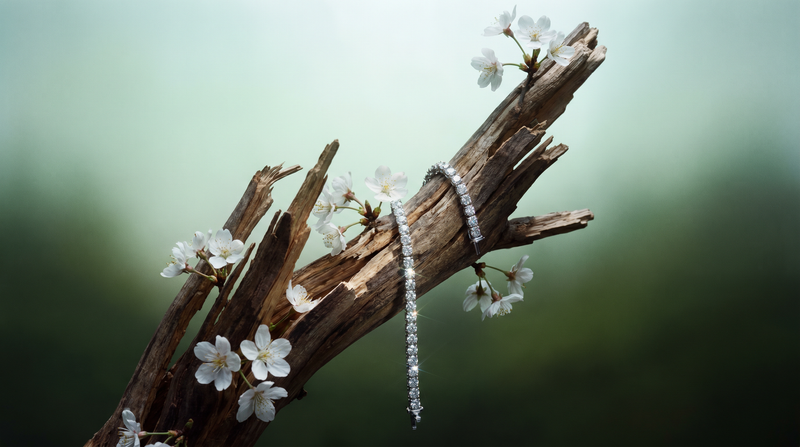 What Is a Tennis Bracelet? Definition, the 1987 Story and How to Recognize One
Read the guide
What Is a Tennis Bracelet? Definition, the 1987 Story and How to Recognize One
Read the guide
 Lab Grown vs Natural Diamond Tennis Bracelets: Same Stone, Different Origin, and Why the Strand Favors Lab-Grown
Read the guide
Lab Grown vs Natural Diamond Tennis Bracelets: Same Stone, Different Origin, and Why the Strand Favors Lab-Grown
Read the guide
 How to Style a Tennis Bracelet: Alone, Stacked, With a Watch and by Occasion
Read the guide
How to Style a Tennis Bracelet: Alone, Stacked, With a Watch and by Occasion
Read the guide
 Tennis Bracelet Care: How to Clean, Store and Maintain a Diamond Tennis Bracelet
Read the guide
Tennis Bracelet Care: How to Clean, Store and Maintain a Diamond Tennis Bracelet
Read the guide
 The Best Lab-Grown Diamond Tennis Bracelet: Seven Checks Before You Buy
Read the guide
The Best Lab-Grown Diamond Tennis Bracelet: Seven Checks Before You Buy
Read the guide
 The Complete Lab-Grown Diamond Guide: Everything You Need to Know Before You Buy
Read the guide
The Complete Lab-Grown Diamond Guide: Everything You Need to Know Before You Buy
Read the guide
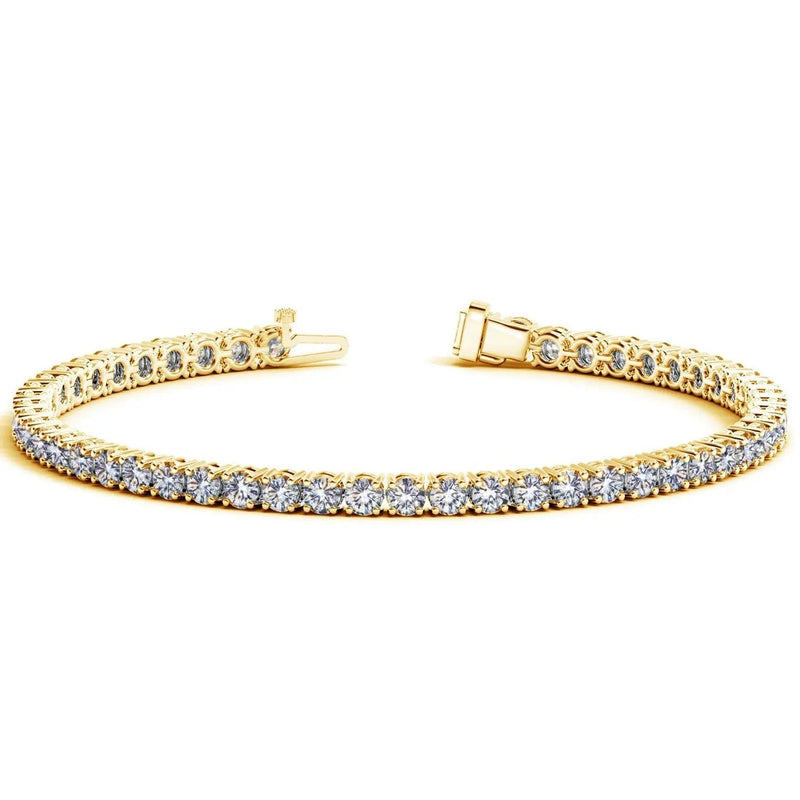 Tennis Bracelet Clasp Guide: Types, Safety and Which One to Trust
Read the guide
Tennis Bracelet Clasp Guide: Types, Safety and Which One to Trust
Read the guide
 Tennis Bracelet Setting Guide: Prong vs Bezel vs Channel, and Which to Choose
Read the guide
Tennis Bracelet Setting Guide: Prong vs Bezel vs Channel, and Which to Choose
Read the guide
 Can You Wear a Tennis Bracelet Everyday? What Daily Wear Asks of the Strand
Read the guide
Can You Wear a Tennis Bracelet Everyday? What Daily Wear Asks of the Strand
Read the guide
About this collection
Every lab grown diamond tennis bracelet here, from 2 to 10 carats, comes in both solid 14K white gold and solid 14K yellow gold — four-prong settings, box clasps and hidden safety closures at every scale, priced at a fraction of mined equivalents. The choice is not whether the line of light holds the eye, but how much of the wrist it claims.
White or yellow? White gold reads icier against the stones; yellow gold is warmer and sits naturally beside the other gold you wear. The diamonds are the same in both, and renewing the rhodium finish on white gold is covered by the lifetime warranty at no charge.
Deciding between carat tiers? Read our Complete Tennis Bracelet Buying Guide, weigh the scale with our Tennis Bracelet Carat Guide, or confirm fit with our Size Guide.
Comparing bracelets across stores? Run each one through the seven checks in our guide to the best lab-grown diamond tennis bracelet.
A short welcome, then new pieces and the occasional note from the workshop — no more than monthly. A few welcome emails first, then one letter a month at most, plus a reminder about pieces you viewed or left in your cart. Unsubscribe in a click. View our privacy policy and terms of service for more info.
