

A tennis bracelet setting is the small mount that holds each diamond in the strand, and the choice between prong, bezel and channel decides how much light the stones show, how well they are protected, and how the bracelet feels against the skin. Four-prong is the standard because it exposes the most of every stone; bezel wraps each diamond in a rim of gold for security; channel runs the stones between two rails for a smooth, flat line. This guide compares the setting types, explains what each one changes on the wrist, and shows how to tell them apart when a listing only gives a name.
What a Tennis Bracelet Setting Is
A tennis bracelet is a line of small diamonds, each held in its own mount, with the mounts hinged to one another so the strand drapes. The setting is that mount. On a solitaire ring, the setting is one decision about one stone. On a strand it is the same decision repeated thirty, fifty or a hundred times, and every repeat adds a little metal, a little weight and a little more surface to catch a sleeve. That is why the setting matters more on a bracelet than it does on almost any other piece: whatever it does to one stone, it does to the whole wrist.
Three things follow from the mount. The first is light. A diamond is cut to return light through its top, and the more of the stone's crown and sides the metal leaves open, the more light gets in and back out. The second is security, because the metal holding the stone is also the metal that wears. The third is the feel of the underside, since a bracelet turns on the wrist and the back of every setting will spend part of the day against the skin.
 Mentioned in this piece
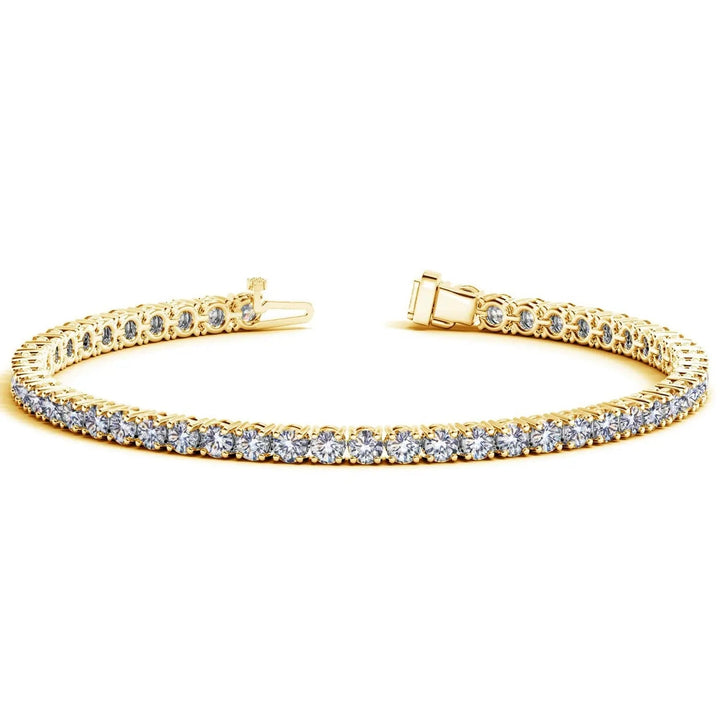
4 Carat Lab Grown Diamond Tennis Bracelet in 14K White or Yellow Gold
$2,753.00
View the piece
Tennis Bracelet Setting Types
Most strands sold today use one of five constructions. They are easy to confuse in a photograph and easy to tell apart in the hand.
Four-Prong Setting
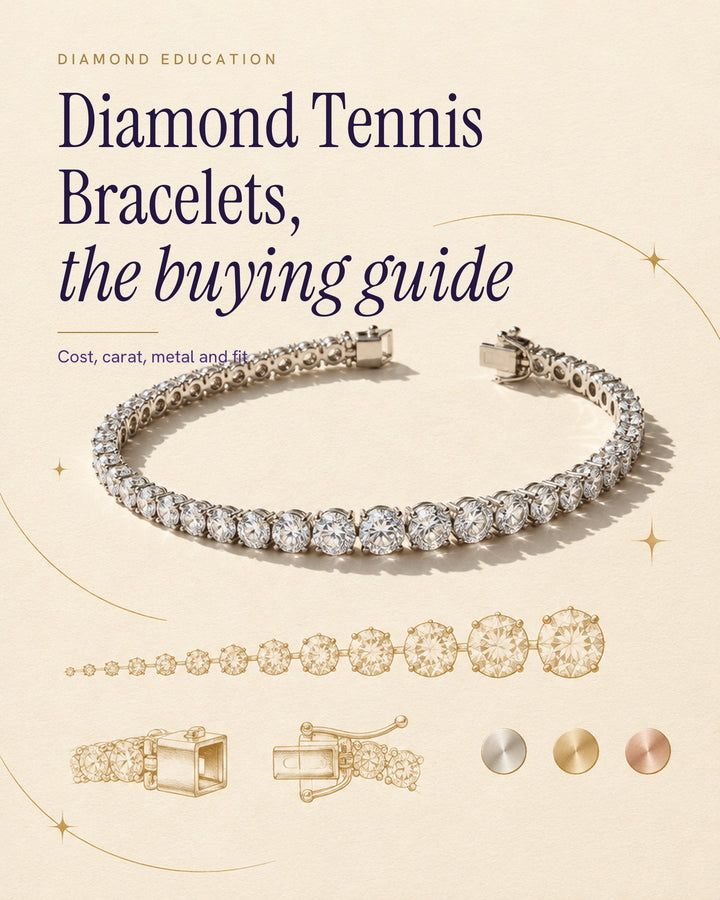
Four small claws rise from a basket under the stone and fold over its girdle, the widest point of the diamond, at four evenly spaced points. Almost nothing else touches the stone, so light enters from the sides as well as the top and the strand reads as a continuous run of diamonds with very little gold between them. The baskets are joined by short hinges, one per stone, which is what lets the bracelet fall in a curve rather than sit as a stiff band. Four-prong is the setting most jewelers mean when they say tennis bracelet without qualification, and every strand in the DEEVE tennis bracelet collection is four-prong, in solid 14K yellow or white gold.
Three-Prong Setting
The same basket with three claws instead of four, usually placed so each prong sits between two neighboring stones. It shows a fraction more of each diamond and gives the strand a slightly more open, airy look. The trade is that each stone rests on one fewer point of contact, so a single worn prong matters more than it would on a four-prong mount. It is a fine setting on a lighter strand that is not worn hard; it asks for a closer eye at each inspection on a heavier one.
Bezel Setting
A bezel is a thin, continuous collar of gold that wraps the full circumference of the stone and is pressed down over the girdle. There are no prongs to lift or snag, the edge of the diamond is fully covered, and the strand reads from a distance as a row of small gold circles with a point of light in each. It is the most secure of the settings and the most protective for an active wearer. It is also the least brilliant, because the rim blocks the light that would otherwise enter the stone from the side, and it makes each stone look slightly smaller than the same diamond in prongs.
Half-Bezel Setting
A compromise between the two: the collar covers two opposite sides of the stone and leaves the other two open. It keeps much of the bezel's protection on the edges most likely to catch and gives back some of the side light. Half-bezel strands are less common than either full bezel or prong, and the look depends heavily on how the open sides are aligned along the strand.
Channel Setting
Here the stones are not held individually at all. Two continuous rails of gold run the length of a section, and the diamonds sit side by side in the groove between them, held by the rails at their girdles. The surface is flat and smooth, nothing projects, and the metal is what the eye reads first. Channel strands are sleek and very hard to snag. They show the least of each diamond, they are stiffer than a hinged prong strand unless the channel is broken into short articulated sections, and a lost stone means opening the rails at the bench rather than lifting one prong.
Bar and Illusion Settings
Two variations appear often enough to name. A bar setting holds each stone between two short vertical bars, one on either side, leaving the top and the two remaining sides open: it looks like channel from the front and prong from the side. An illusion setting surrounds a small stone with a bright, faceted plate of metal so the stone reads larger than it is. Both are ways of stretching a modest carat weight; neither is what the trade means by a classic tennis bracelet.
Prong vs Bezel on a Tennis Bracelet
The comparison most people are really asking for is prong against bezel, so it is worth setting the two side by side on the things that change day to day.
Light. Prongs win, and not narrowly. A four-prong mount leaves the crown and most of the pavilion open; a bezel covers the girdle and a sliver of the crown all the way round. Under the same lamp, a prong-set strand throws more and sharper flashes. If the bracelet is being bought for its sparkle, prongs are the setting that delivers it.
Security. Bezel wins. A collar cannot lift the way a prong can, and there is no claw to catch a thread and be levered open. On a prong strand, security is a maintenance question: the prongs are fine because they are meant to be, they wear where they touch the stone, and a worn prong is easy to retip before it fails. On a bezel it is closer to a built-in property.
Snagging. Bezel wins again. Prongs are the part of a tennis bracelet that catch knitwear and cuffs. A well-finished four-prong strand keeps its claws low and rounded, but no prong is as smooth as a rim.
Apparent size. Prongs win. A bezel adds a ring of metal around each stone, and the eye reads the metal as the edge of the diamond, so the stone looks smaller. The same total carat weight in prongs reads as more diamond.
Weight and feel. Bezel uses more gold per stone, so a bezel strand of the same carat weight is heavier and sits more firmly. Some wearers like that; a thin wrist often prefers the lighter prong strand.
Repair. Prongs are the easier setting to service. Retipping a prong, or replacing one, is bench work that takes minutes and leaves no mark. Reseating a stone in a bezel means reopening and reburnishing the collar, which is a longer job and harder to make invisible. On a DEEVE strand, prong work and stone resetting are covered by the lifetime warranty and done in-house.
Types of Tennis Bracelets Beyond the Setting
Search for types of tennis bracelets and the setting is only one of the axes that come back. The others are worth knowing so a listing reads clearly.
By stone shape. Round brilliant is the classic and the easiest to match down a strand; it is the only shape DEEVE sets in its tennis bracelets. Emerald and baguette cuts give a flatter, more architectural line with long, quiet flashes rather than sparkle. Oval, marquise and pear strands read as more decorative and are usually set with the stones' points aligned along the bracelet.
By link style. A straight line strand places each stone directly behind the last. An S-link or wave strand offsets alternate stones so the bracelet reads as a gentle zigzag. A three-row or multi-row strand sets two or three lines of stones side by side, closer to a cuff than to the classic single line.
By total weight. The same construction scales from a fine line of small stones to a heavy strand of large ones, and the carat total changes the look more than any setting choice does. The carat guide covers how each weight sits on the wrist.
By stone origin. A strand can be set with lab-grown or natural diamonds in any of the constructions above. DEEVE's tennis bracelets are set with lab-grown round diamonds graded E–F (colorless) for color and VVS2–VS1 (very, very slightly to very slightly included) for clarity, with an AGI certificate, which is the range that matches cleanly across a line.
How the Setting Changes Care and Wear
A prong strand asks for one habit: have the prongs looked at on a regular schedule, because they wear a little every day and the moment to retip is before a claw has worn thin, not after a stone has lifted. Between inspections, a stone that rocks under a fingernail, a prong that looks shorter than its neighbors, or a claw that catches where it did not before are the three signs to act on. Warm water, a drop of mild soap and a soft brush keep the baskets clear of the film that builds under each stone and dulls the light.
A bezel strand needs less watching and the same cleaning. The collar can be checked by running a thumb along the strand: a rim that has lifted from the stone will catch. A channel strand should be cleaned with care around the rails, since a stiff brush pressed into the groove can work against the seat of a stone over time. The care guide covers the full routine for each.
The setting also decides where the wear shows first. On a white gold prong strand the tips of the prongs are the first surface to lose their rhodium finish, because they are the highest points and touch everything; on a bezel it is the top edge of the collar. Either way, renewing the finish is warranty service on a DEEVE piece.
Which Setting Is Best for a Tennis Bracelet?
For most wearers, four-prong. It is the setting that shows the diamonds, keeps the strand light and flexible, is the easiest to service, and is what a tennis bracelet has meant since the design took its name. Its one real cost, the possibility of a prong wearing or snagging, is managed by the same annual inspection a bracelet should have anyway.
Choose bezel if the bracelet will be worn through work that is hard on the hands, if snagging is a daily problem, or if the wearer would rather have security than sparkle and does not mind the stones reading a little smaller. Choose channel for the sleekest, flattest line and accept that it shows the least of each stone. Three-prong suits a light strand worn gently. Bar and illusion settings are ways to make a small strand look larger and are best judged in person.
Whatever the mount, the second decision is the clasp, because the strand stays on the wrist only as long as its closure holds; the clasp guide compares the closures the same way. If you want to see what a four-prong strand looks like at close range, the 4 carat lab-grown diamond tennis bracelet shows the baskets, the hinges and the prongs from the underside as well as the top. For how the setting fits with carat weight, metal, sizing and cost, the setting section of our complete tennis bracelet buying guide is the place to continue.



0 comments