


Bangle vs bracelet comes down to how the piece is built. A bangle is a rigid band of metal that keeps its shape off the wrist, while a bracelet, in the everyday sense, is a flexible chain or strand that closes with a clasp and drapes. Every bangle is a kind of bracelet, but not every bracelet is a bangle. In our range, the gold bangle bracelets mostly open at the front or swing on a hinge, and the gold chain bracelets close with a clasp and come in set lengths. Shape, closure and sizing are the three differences that decide which one suits you.
Bangle vs Bracelet, Counted From Our Spec Sheets
Counted from our spec sheets, the table below sets the 28 bangles and cuffs in our bangle collection beside the 33 pieces in our chain bracelet collection. It counts how each one closes, as its spec sheet names the closure, and how each one is sized, as its size option lists it. Where a spec sheet names no closure, the table says so rather than guessing one. Every piece in both collections is 14K gold.
| How it closes or sizes | Bangles and cuffs (28) | Chain bracelets (33) |
|---|---|---|
| Open cuff or slip-on, no clasp | 11 | 0 |
| Omega cuff, closure given as the design | 2 | 0 |
| Box clasp | 3 | 5 |
| Snap lock clasp | 3 | 0 |
| Push-to-open clasp | 2 | 0 |
| Lobster clasp | 3 | 26 |
| Spring ring | 0 | 1 |
| Clasp named only as secure | 0 | 1 |
| Closure not listed | 4 | 0 |
| Sold with a size option | 9 of 28, one size each, 7 to 7.5 inches | 33 of 33, 6 to 8.5 inches |
| Two or more sizes offered | 0 | 10 |
Two things stand out. Almost half of the bangles have no clasp at all: they are open cuffs or slip-on bands that go on over the hand or past the narrow side of the wrist. Almost every chain bracelet closes with a lobster clasp. And sizing works the other way round. Every chain bracelet is sold by length, and ten of them come in more than one, while most of the bangles are made in one fixed shape and only nine carry a size at all.

What is a bangle bracelet?
A bangle bracelet is a bracelet made as a rigid band rather than a flexible strand. It holds its round or oval shape whether it is on the wrist or on a table. Some bangles are closed circles that slide over the hand, some are open cuffs with a gap at the front, and some swing open on a hinge and close with a clasp. What they share is that the band itself does not bend.
 Mentioned in this piece
Interlocked Bangle in 14K Two-Tone Gold
$2,506.00
View the piece
How a Bangle Sits and Closes
Because a bangle is rigid, it sits as a ring around the arm rather than lying against the skin. A closed or hinged bangle rests on the wrist bone and moves a little as you do, while an open cuff grips the narrow part of the wrist and stays where it is put. That difference is why a bangle reads as a clean line of gold from across a room.
Our bangles close in four ways. The open cuffs, such as the panther head cuff bangle, have no clasp: you turn the gap to the narrow side of the wrist and ease it on. The triple wrap tubogas bangle is a flexible coil that slips on with no clasp. Hinged bangles open along one side and close with a clasp, as the interlocked bangle in two-tone gold does with a box clasp, and the diamond flower hinged bangle adds a figure-eight safety. The petite twist bangle closes with a snap lock clasp.
Is a cuff a bangle?
A cuff is a kind of bangle. It is a rigid band like any other bangle, but it is left open at the front instead of closing into a full circle. You put a cuff on by turning the gap to the narrow side of the wrist and easing it around, so it needs no clasp. In our range eleven bangles are open cuffs or slip-on bands with no clasp, and two more are omega cuffs.
How a Chain Bracelet Sits and Closes
A chain bracelet is flexible. Its links bend, so it lies flat against the skin, follows the curve of the wrist and falls toward the hand when the arm is lowered. That drape is what makes a chain bracelet easy to forget you are wearing, and it is also why length matters more on a chain bracelet than on most bangles.
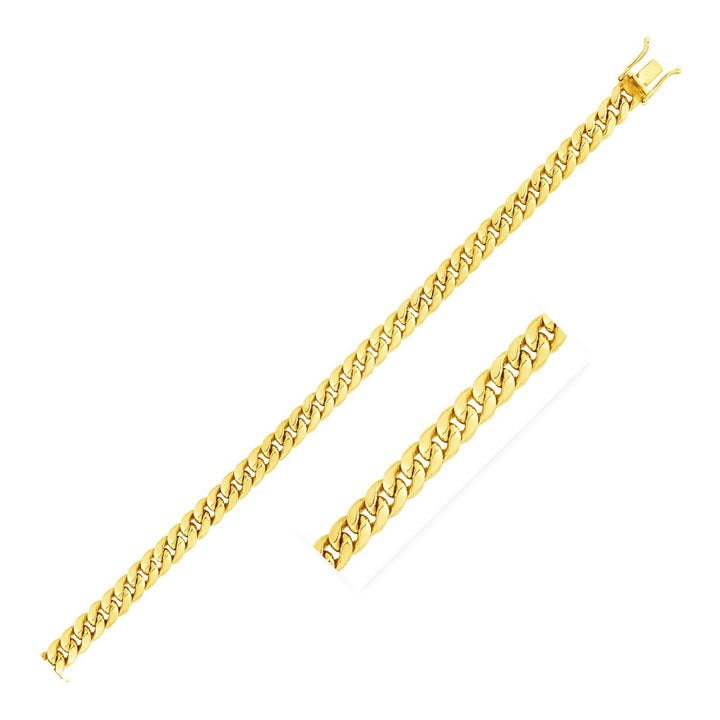
Nearly all of our chain bracelets close with a lobster clasp, a spring-loaded hook that clips onto a ring at the other end. The wheat chain bracelet and the solid figaro chain bracelet both close this way, with end caps where the chain meets the clasp. Five of the heavier chain bracelets use a box clasp instead, a tongue that slides into a box and clicks shut, and one uses a spring ring.

Weight follows width and construction. The wheat chain bracelet at 3.20 mm weighs about 3.6 grams at 7.25 inches, and the solid figaro at 3.00 mm about 3.1 grams at 7 inches. A bangle carries much more gold in one piece: the interlocked bangle weighs about 10.3 grams and the petite twist bangle 12.6 grams, as their spec sheets list them.
Sizing a Bangle vs a Bracelet
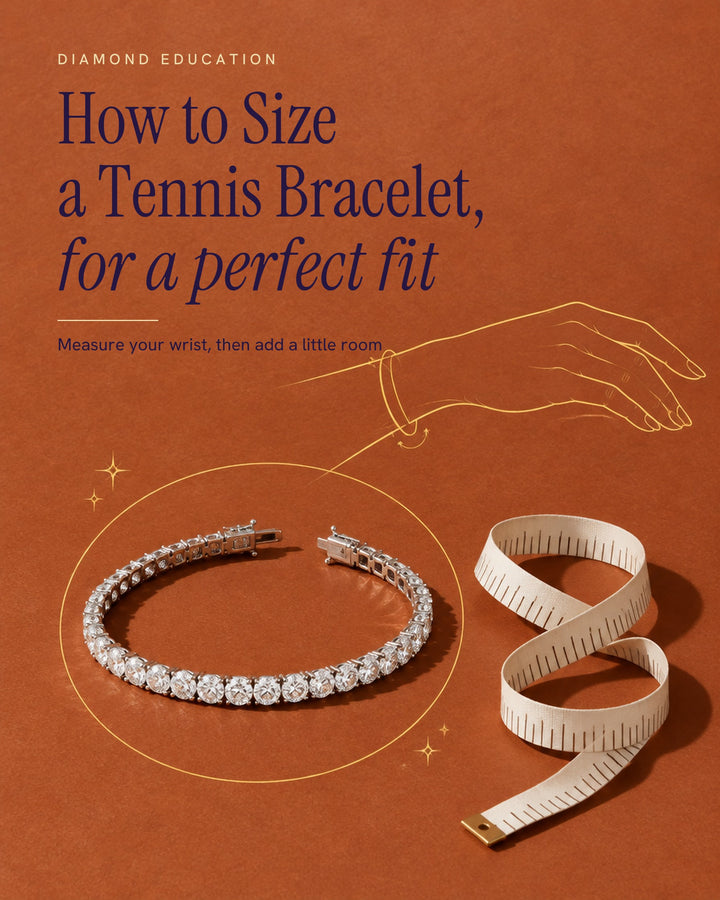
A chain bracelet is sized by length. Measure the wrist just above the wrist bone with a soft tape, then add a little room so the chain can move. All 33 of our chain bracelets are sold by length, from 6 to 8.5 inches, and ten of them come in two or more lengths, such as the solid curb chain bracelet at 7 or 8.5 inches.
A bangle is sized by the hand as much as the wrist. A closed bangle has to pass over the widest part of the hand, so it is chosen by measuring around the knuckles with the thumb tucked in. A hinged bangle opens, so it only has to fit the wrist itself. An open cuff can be eased a little wider or narrower by hand. Nine of our bangles are listed with a size, from 7 to 7.5 inches, each made in one size. Our tennis bracelet sizing guide walks through measuring the wrist step by step.
Can you wear a bangle every day?
A 14K gold bangle can be worn every day, and solid gold suits it because the alloy is hard enough to take knocks against a desk or a door frame. A hinged bangle with a safety catch, or a cuff that grips the wrist, stays put through a normal day. Take any bangle off for the gym, heavy lifting and cleaning with chemicals, and check that a clasp seats fully before wearing it out.
Bangle or Bracelet: Which to Choose
Choose a bangle when you want a defined line of gold that keeps its shape and is seen. A cuff is the easiest to put on with one hand, a hinged bangle suits a smaller hand or a closer fit, and a closed bangle suits a narrow hand. Choose a chain bracelet when you want something that drapes, sits flat under a sleeve and can be sized to the wrist exactly.
The two are often worn together. A chain bracelet beside a bangle mixes a flexible line with a rigid one, and it is the combination most stacks start from.
How do you wear bangles?
Wear one bangle on its own as a clean line of gold, or pair it with a fine chain bracelet so the rigid and the flexible pieces set each other off. When you stack several, leave space between them rather than crowding the wrist, and keep a watch on the other arm. Open cuffs sit best on the narrow part of the wrist, closed and hinged bangles a little higher up.
Our guide to layering necklaces, rings and bracelets goes through how to space a stack.
Compare the pieces in our gold bangle bracelets and gold chain bracelets collections, or start with the interlocked bangle in 14K two-tone gold, a hinged bangle with a box clasp.
Warranty. Every DEEVE piece carries a lifetime manufacturer's warranty for the original purchaser, serviced in-house, with complimentary cleaning, inspection and prong tightening for the life of the piece and rhodium re-plating on white gold at no charge. Read the warranty.



0 comments